How to Tailor Your Resume to a Job Description (2026 Guide)
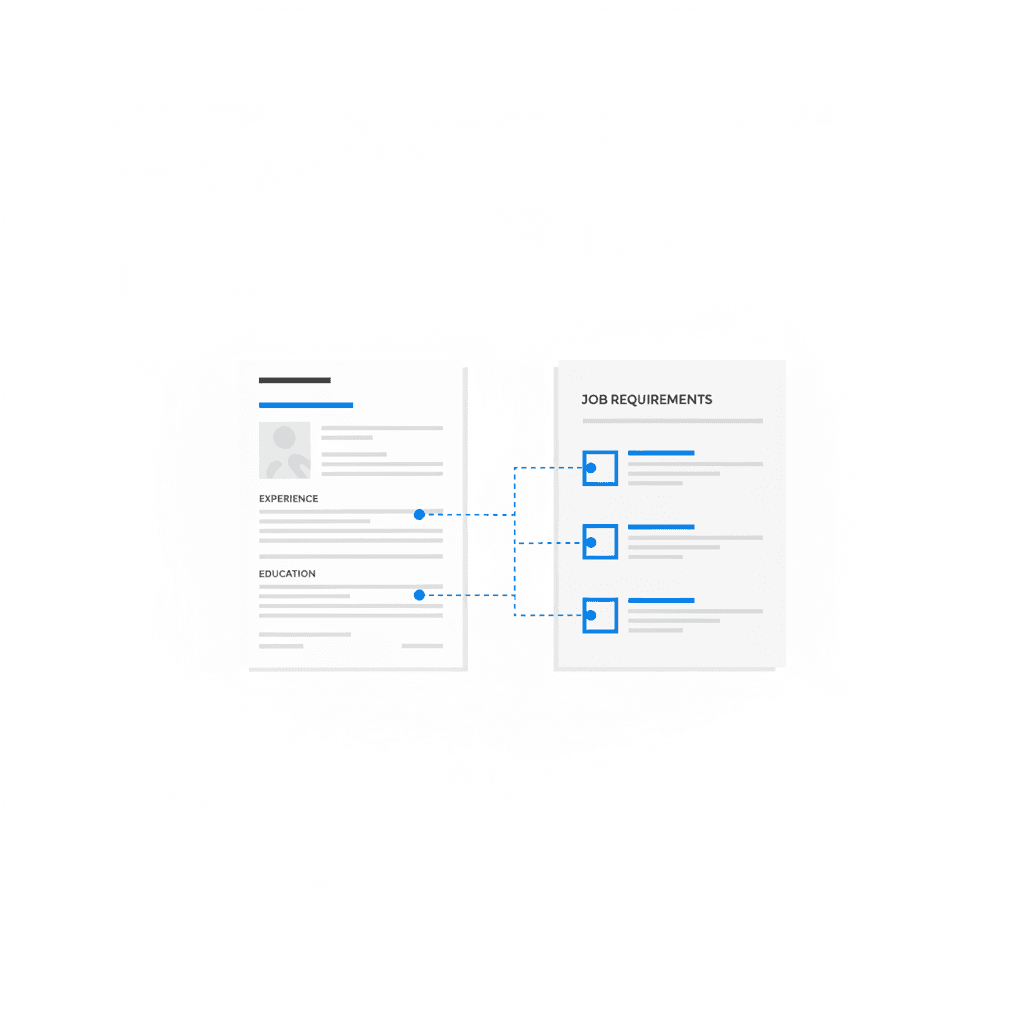
Short version: To tailor your resume to a job description, change it so one specific role's top requirements are obvious in your title, summary, skills, and the first bullets under each job. Pull the handful of things the posting really asks for, match each one to proof from your background, and use the posting's own wording where it's honestly true. Done well, tailoring is an edit of about 20 minutes, not a full rewrite.
Most people send the same resume everywhere and hope. Then they wonder why 40 applications turned into two callbacks. The fix isn't a fancier template or more buzzwords. It's making each resume look like it was written for the job in front of it. That's the whole idea behind tailoring, and it's the highest-return thing you can do before you hit submit.
Here's exactly how to do it.
What "tailoring your resume" actually means
Tailoring is editing your existing resume so it clearly answers one job's requirements. You're not inventing a new resume. You're re-pointing the one you have: swapping the headline, tightening the summary, reordering bullets, and mirroring the words the employer used, so a busy reader sees the match in seconds.
That last part matters more than people think.
Why tailoring works: the 7 seconds and the ATS
Two things decide whether your resume gets a real read.
First, the human. A recruiter's initial pass is fast. In a well-known eye-tracking study from Ladders, recruiters spent an average of about 7.4 seconds scanning a resume before deciding to keep reading or move on. In seven seconds, they're not absorbing your career story. They're checking, "Does this person obviously fit the role?" Tailoring puts the answer where their eyes land.
Second, the software. Most medium and large employers now use an applicant tracking system (ATS) to collect and organize applications, and recruiters search and filter inside it by skills, titles, and keywords. You don't need to "beat" a robot with tricks. You need your resume to contain the real terms a recruiter would search for, in plain, parseable text. For the full picture of what an ATS actually does to your application, including what really triggers an automatic rejection, we broke it down separately.
Ignore anyone selling you a magic ATS hack. The honest version is simpler: match the role's language truthfully, and make relevance easy to see. Both the human and the software reward the same thing.
How to tailor your resume to a job description, step by step
1. Pull the real requirements from the posting
Read the job description once for meaning, then again with a highlighter. Mark the job title, the must-have skills, the tools named, and any phrase that repeats. Ignore the boilerplate about "fast-paced environments." You're looking for the things this role is actually hiring for, which is usually somewhere around five to seven items. Write them down in the order the posting seems to care about.
2. Build a match map
For each requirement, write one specific thing from your background that proves it: a project, a result, a tool you've used, a number. Two columns. Job needs on the left, your proof on the right.
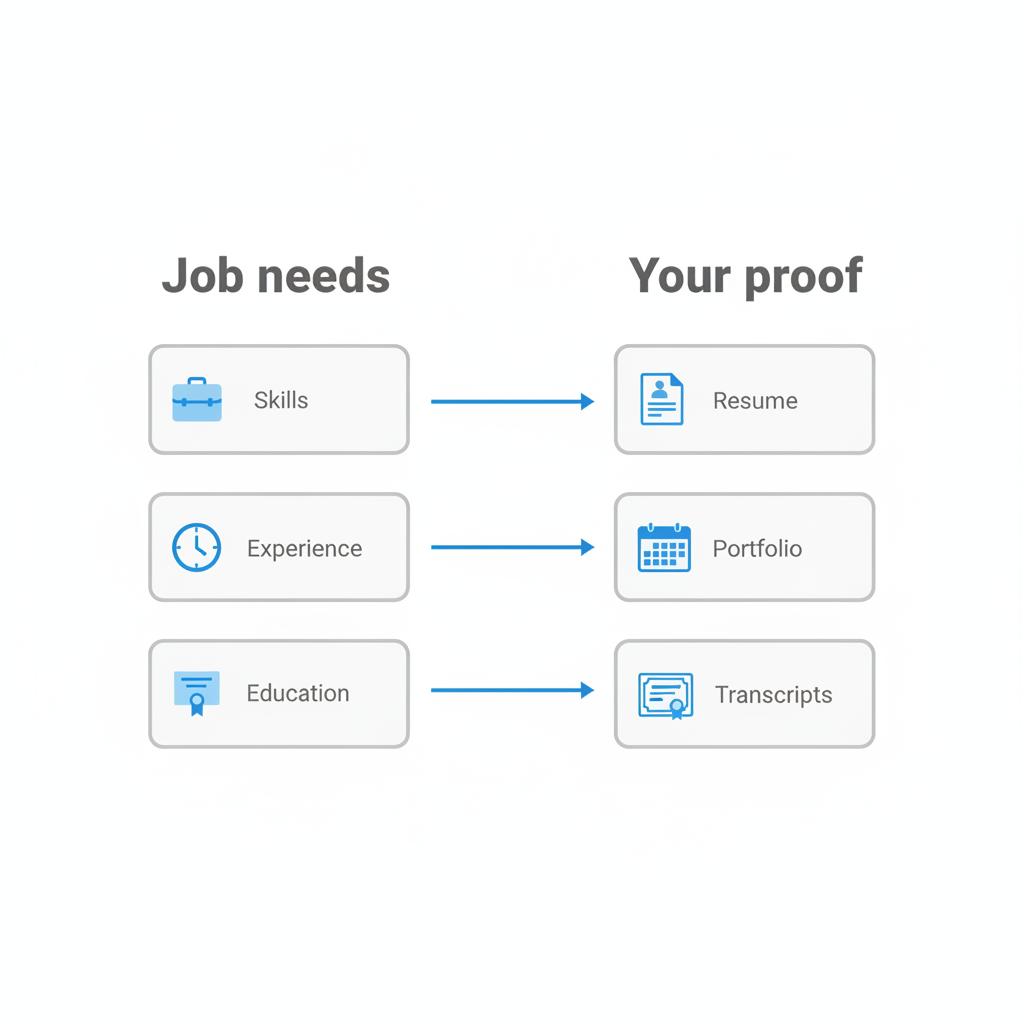
Here's what that looks like for a data analyst posting (the proof lines are illustrative):
| Job needs (from the posting) | Your proof |
|---|---|
| SQL and dashboard reporting | Built 20+ SQL dashboards; automated a report that took 3 days into a 4-hour job |
| Works with business stakeholders | Presented monthly KPIs to three department heads and turned their asks into tracked metrics |
| Improves processes / reduces cost | Redesigned the returns workflow across three warehouses |
| Excel and data cleaning | Cleaned and reconciled 100k-row datasets monthly for finance |
This map is the whole job. Once every top requirement points at real evidence, the resume edits almost write themselves. If a requirement has nothing next to it, that's useful too. It shows where you're genuinely light, and where to lean on other proof.
3. Rewrite your headline and summary to mirror the target role
Put the target job title (or a close, honest version of it) near the top. If the posting says "Data Analyst" and your last title was "Reporting Analyst," a headline like "Reporting Analyst · Data Analytics & SQL" bridges the two truthfully. Then rewrite your summary in two or three lines that name the role's top priorities and the proof you carry for them. No objective statements, no adjectives doing the work. Concrete nouns and results.
4. Lead with your most relevant bullets, and quantify them
Under each job, the first bullets get read closely; the ones near the bottom often get skimmed. So reorder. Move the accomplishments that map to this role's requirements to the top, and push generic duties down or out. While you're there, add numbers wherever they're true. "Cut reporting time" is forgettable. "Cut monthly reporting time from 3 days to 4 hours by automating the pipeline" is a reason to call you.
5. Feature the right skills, in the job's words
Your skills section is prime keyword real estate, so make it match. Lead with the named must-have skills and tools from the posting that you actually have, using the posting's exact terms. If it asks for "Power BI" and you list "data visualization tools," swap in "Power BI." If it names "stakeholder management" and you do it, write "stakeholder management," not "worked with people across teams." Recruiters search the ATS for the words they wrote in the posting, so use those words where they honestly describe you. Here is how to find resume keywords and how ATS matching treats them, system by system. This isn't gaming a filter. It's not getting missed for work you actually do because you called it something else.
6. Cut or shrink what doesn't support this role
Every line that isn't helping is quietly hurting, because it spends the reader's seven seconds on the wrong thing. That decade-old unrelated job can become one line. The hobby section can go. Relevance is a ratio, and cutting raises it.
7. Keep it ATS-readable
Complex layouts can trip up parsers. Use a clean, single-column format, standard section headings ("Experience," "Skills," "Education"), real text instead of words baked into images, and a common file type like PDF unless the posting asks for something else. Skip tables in the resume file itself, text boxes, and header/footer tricks. Simple parses cleanly, and it reads well for humans too. For the sourced version of these rules, here is what the ATS vendors actually document about resume format.
8. Do a two-minute final check against the posting
Put the job description and your resume side by side. For each of your top requirements, can you point to where the resume answers it? If yes, you're done. If a top requirement is buried on page two, move it up. This last pass is what separates "technically tailored" from "obviously the right person."
A quick before and after
Say the posting is a Data Analyst role that asks for SQL, stakeholder reporting, and process improvement. Here's a slice of a resume before and after tailoring (numbers are illustrative):
Before (generic):
Reporting Analyst Experienced analyst responsible for various reporting and operational tasks.
- Responsible for reports and process improvements
- Worked with different teams on data needs
After (tailored to the posting):
Reporting Analyst · Data Analytics & SQL Analyst who turns messy data into decisions: SQL reporting, stakeholder KPIs, and process fixes that cut cost.
- Automated a 3-day manual report into a 4-hour SQL pipeline, freeing ~2 days a month
- Redesigned the returns process across three warehouses, cutting handling cost 18% (~$240K/year)
Same job. Same person. One of them survives the seven-second scan and carries the posting's own keywords.
Common tailoring mistakes
- Keyword stuffing. A wall of skills you can't back up reads as noise to recruiters and fools no one in an interview.
- Editing only the summary. If the bullets underneath still describe a different job, the tailoring is skin deep. The evidence has to move too.
- Claiming skills you don't have. Mirroring the posting only works when it's true. Borrowed keywords collapse the moment someone asks a follow-up.
- Over-formatting. The template that looks great in a design tool can arrive as scrambled text inside an ATS.
- Not recording which version you sent. Tailoring produces a different resume for every role, and five weeks later a recruiter replies about one of them. Keeping a record of what you sent and when is what turns a month of applying into something you can learn from.
How long should this take? (and the shortcut)
Once you've done the match map, tailoring a resume usually runs about 15 to 20 minutes. The map is the slow part, and it gets faster with practice.
The cover letter is the other half of the same job, and it has a newer trap attached now that almost everyone drafts one with a model: matching the posting stopped being the thing that makes a letter stand out.
There is also a ceiling on what extra volume buys you. In the US government's own jobseeker data, offer rates peak in a band that works out to roughly three to nine applications a week and fall above it.
If you're applying to a lot of roles, doing this by hand for each one is a grind, which is exactly why most people stop tailoring and go back to spraying the same resume. That's the problem JobMason was built for: paste a job link, and it reads the actual posting and helps you tailor your whole application to a job posting automatically, producing a matched resume, cover letter, hiring-manager email, and answers to the application questions, usually in about a minute. You edit and export it however you want, and the tracker that keeps your whole search organized is free. The method above is still the method. A tool just does the repetitive parts so you'll actually keep tailoring.
FAQ
Do I need to tailor my resume for every single application? Tailor for the jobs you actually want. For a genuine target, the match-map pass is worth the 20 minutes. For a long-shot volume apply, at minimum align the title and top few bullets.
Isn't mirroring keywords just gaming the system? No, if you only use words that are true. You're describing your real experience in the employer's vocabulary so you don't get filtered out for a semantic mismatch. Inventing skills is the part that backfires.
How many keywords should I include? There's no magic count. Cover the role's named must-have skills and tools where they honestly apply, worked naturally into your summary, skills, and bullets. If a sentence exists only to hold keywords, cut it.
Does tailoring actually help with the ATS? It helps because recruiters search and filter inside the ATS using the posting's own terms. Matching that language, and keeping your formatting clean and parseable, makes you findable. There's no trick beyond being relevant and readable.
How much of my resume should change between applications? Usually the headline, the summary, the skills you feature, and the order and wording of your top bullets. Your core facts, dates, and roles stay put.
The one thing to do next
Open the job you're eyeing right now and build the match map: its top requirements on the left, your proof on the right. That single page tells you what to feature, what to cut, and whether this role is a real fit. Tailoring your resume to a job description isn't about writing more. It's about making the match impossible to miss in the seven seconds that decide everything.
Sources
- Recruiters spend about 7.4 seconds on an initial resume scan (Ladders eye-tracking study).
- Most medium and large employers use an ATS to receive and filter applications.
- Tailoring means mirroring the posting's language and evidence; use exact keywords truthfully, quantify, cut irrelevant content, keep formatting ATS-simple.
- Match your resume's title and content to the job description's priorities and keywords.